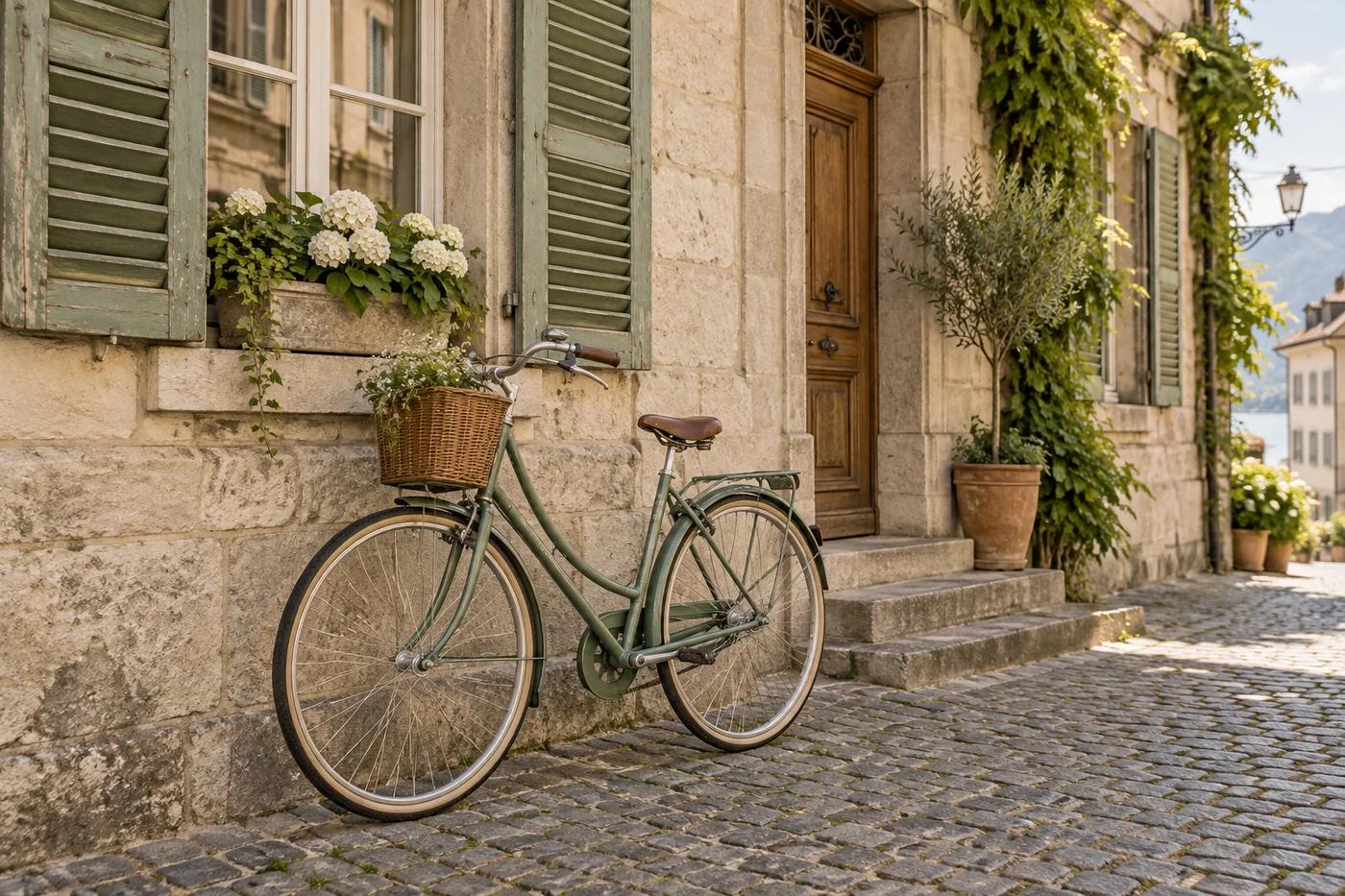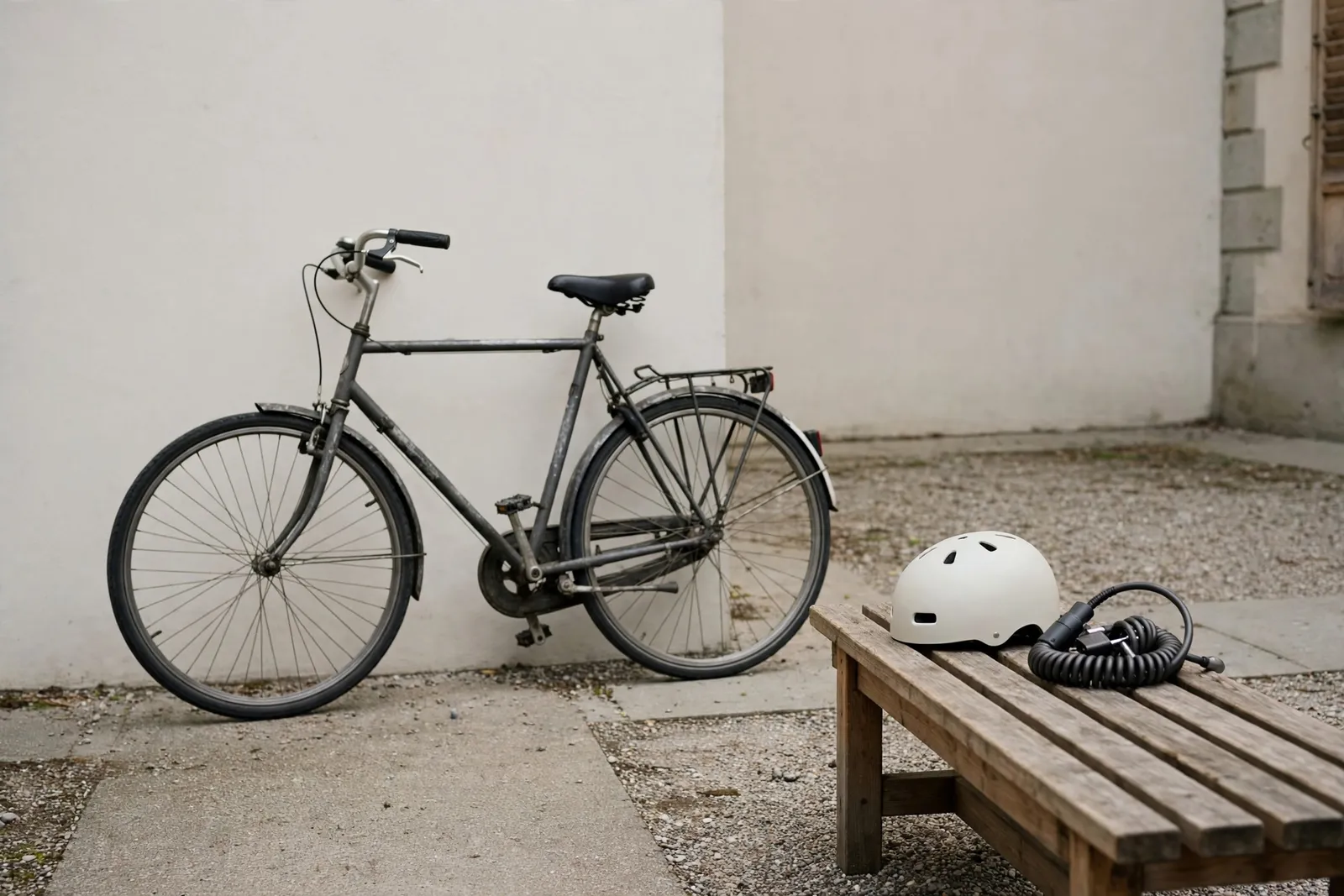
Measure your inseam before you look at listings
The right size is not a guess, it is measured. Barefoot, with your back against a wall, hold a book between your legs as if you were in the saddle, level. Have someone read the distance from the floor to the top of the book. Repeat this twice and keep the average: that is your inseam.
This measurement gives you two reference points: the frame height you can stand over and the saddle height that suits you. It does not replace a test ride, but it immediately rules out impossible listings.
- Standover clearance: standing flat over the frame, there should be a few centimetres between the tube and you. On a mountain bike, this reference point matters twice as much.
- Saddle height: seated, heel on the pedal in the lowest position, your leg should be fully extended. With the front of your foot on the pedal in the pedalling position, your knee remains slightly bent.
- Length: with your arms slightly bent, you should not be stretched towards the handlebar.
- Foot on the ground: when stopped, you should be able to put your foot down without leaning dangerously.
Decode the size stated in the listing
‘Size M’, ‘54’, ‘28 inches’: these terms do not refer to the same thing. Letters are a convention specific to each brand. A two-digit number often corresponds to a measurement in centimetres. Inches most often refer to wheel diameter, but on a mountain bike the frame size can also be expressed in inches (17, 19, 21 inches, etc.). So a mention in inches is not enough to conclude that it refers to the wheel.
A seller who knows their bike can measure the frame in one minute: from the centre of the bottom bracket to the top of the seat tube, the most common method, even if some manufacturers use other reference points. Ask for this measurement, then compare it with your inseam. If the seller hesitates, suggest that they take it and send you a photo of the tape measure placed along the tube.
- The frame measurement in centimetres, most often from the centre of the bottom bracket to the top of the seat tube.
- The type of bike and intended use: city, road, mountain bike, electric.
- The year of purchase or the model year.
- Wheel size and tyre width.
- The presence of the purchase invoice and the frame number.
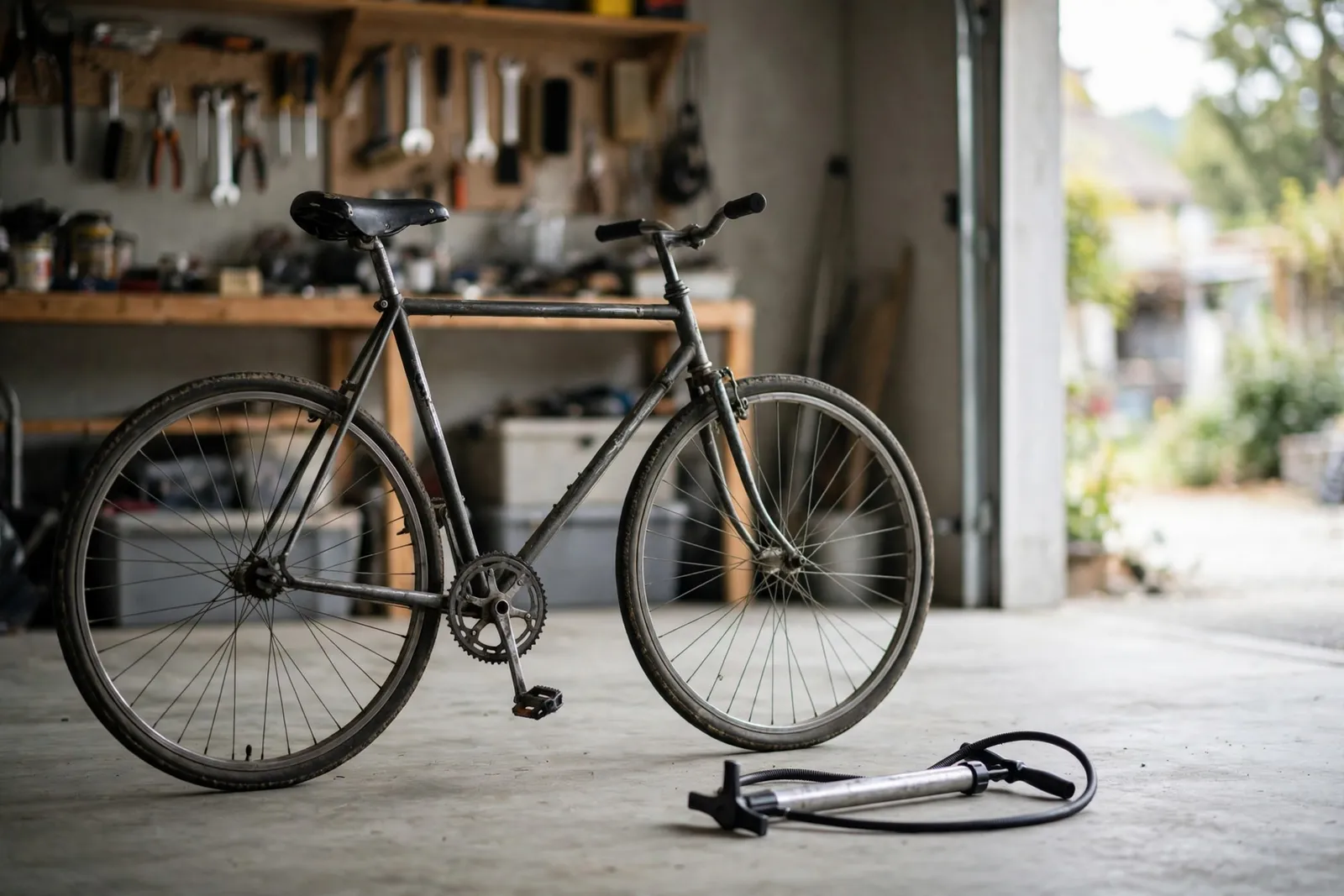
Questions to ask the seller before you travel
Defects on a bike never appear in the listing, but they do not appear in the photos either. A few questions are enough to tell a careful seller from a hurried one.
- Why are you selling this bike?
- Has there been a fall, an accident or a frame repair?
- How many owners before you, and do you have the purchase invoice?
- When was the chain changed, and has the bike been serviced recently?
- Is the frame number legible and does it match the invoice?
- Which accessories are included: lights, mudguards, rack, lock, charger for an electric bike?
An evasive answer about a fall or about the bike's origin is enough to move on to the next listing. There are others.
What to inspect on site
Allow time, light and a flat surface. A cracked frame costs more than the bike itself.
- Frame and fork: look for cracks, dents, cracked paint around the welds, signs of impact on the fork. On a carbon frame, a dull sound when tapping deserves closer examination.
- Wheels: shake each wheel sideways. Play in the hub can be felt, a buckled wheel can be seen.
- Rims: look for the wear line on the flanks. If it has disappeared, the rim is at the end of its life.
- Tyres: cracks, cut sidewalls, hard rubber.
- Drivetrain: hooked teeth on the chainring or cassette, dry and shiny chain.
- Brakes and steering: worn pads, frayed cables, warped disc. Lock the front wheel and rock the bike to feel the headset play.
On an electric bike, switch on the assistance and check that the motor engages. Ask for the age of the battery and request the charger, as well as the key if the battery is locked.
The test ride: position can be adjusted, size cannot be fixed
A lap around the courtyard tells you nothing. Ask for ten minutes on a quiet path, with a climb if the area allows.
- Set the saddle to your height before you leave, with your Allen key.
- Shift through all the gears, including under light effort.
- Brake firmly at low speed, then on wet ground if possible.
- Let go with one hand, turn your head: the bike should remain stable.
- Listen: creaking when pedalling, freehub whistling, rattling.
If the frame is too big, no adjustment will correct the position. You will be too stretched out, with your arms straight, and you will lose control on descents. A frame that is a little too small can be compensated with a longer seat post and a suitable stem, within reasonable limits.
Complete the sale without unpleasant surprises
Meet the seller in a public, busy place, in daylight, and see the bike before you hand over any money.
Pay at handover, in cash or by TWINT, when the bike suits you. Never send a deposit remotely, even to reserve it. TWINT never asks for a code received by SMS to receive money: if someone asks you for one, end the conversation.
- The purchase invoice, if it still exists.
- The frame number noted and compared with the invoice.
- A simple receipt, dated, with the price and contact details of both parties.
- The lock and accessories agreed, taken away the same day.
A used bike in your size, inspected and then test ridden, is better than a new bike bought blind. Publish or search for your listing on okazio, and keep control of the meeting and the payment.
Sources
Prepared with AI tools, checked and proofread by the okazio editorial team.
An unfamiliar word in a listing?
Find its definition, an example and what to check in our glossary.
Explore the glossary