What gives a used washing machine its value
A washing machine loses value quickly. The price depends less on the stated age than on three things: the brand and availability of spare parts, the capacity and spin speed, and the real condition of the drum and seals. A clean 8 kg machine that spins fast sells better than a small tired model.
Energy consumption matters to the buyer, who will pay for electricity for years. Note the energy class, the exact model and the year of purchase. These three pieces of information will serve you for the listing and for answering questions.
- Year of purchase and remaining warranty period, if any.
- Capacity in kg, maximum spin speed, energy class.
- Dimensions and weight, useful for transport.
- Accessories included: hoses, instruction manual, transport bolts.
- Repairs already done and parts replaced.
Checking the drum and the belt
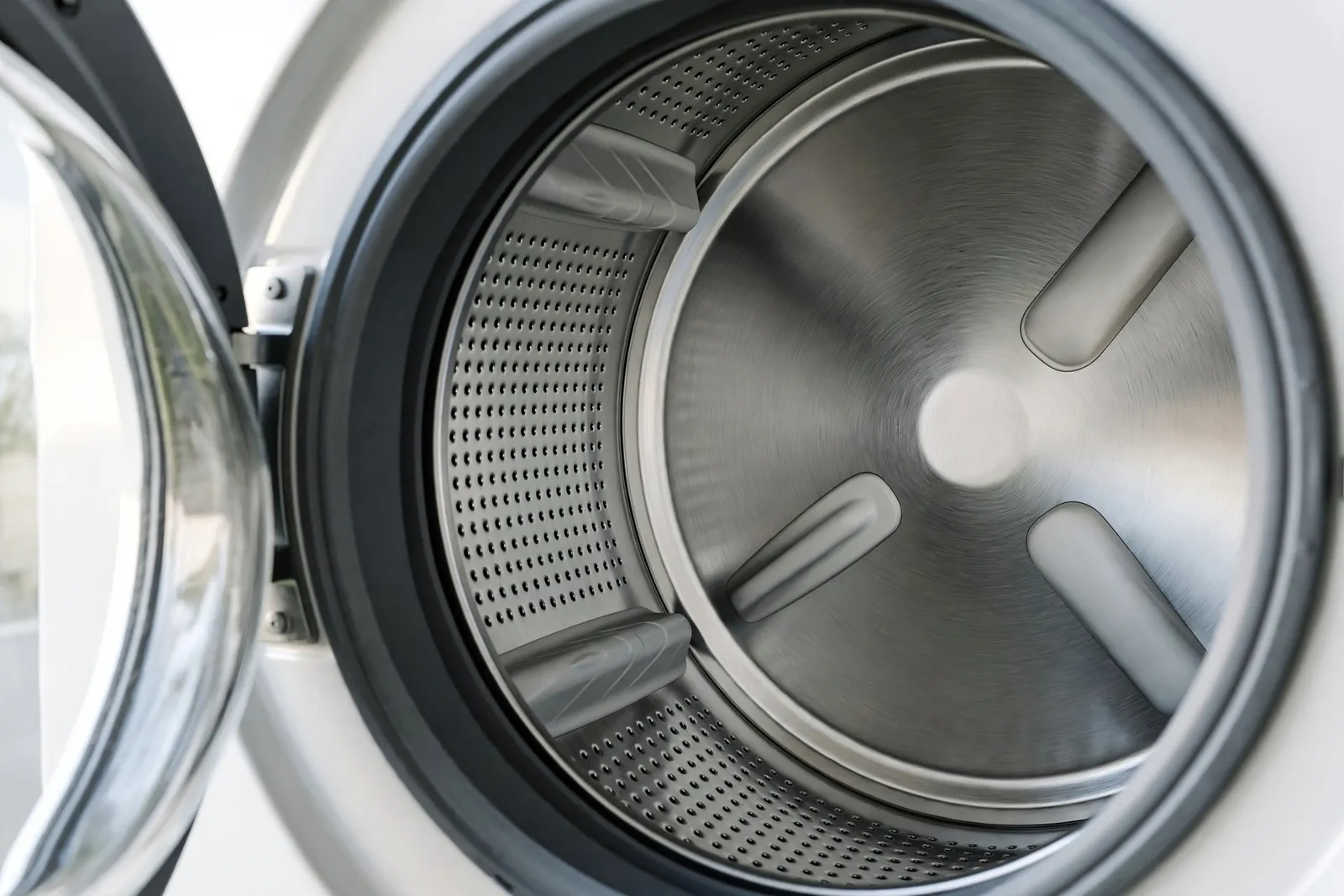
Unplug the machine, close the water inlet tap, open the door and light the inside with a torch. The drum is judged by hand and by ear, without any tools.
- Turn the drum by hand: it must turn freely, with no stiff spot and no bearing noise.
- Run your hand over the wall and the paddles: no roughness, no rusty edge that would catch the laundry.
- Shake the drum slightly: clear play points to worn bearings.
- If the back is accessible, look at the belt: no cracks, no greasy deposit, no trace of a leak on the pulley.
A drum that catches tears the laundry, and that is the first cause of complaint after a sale between private individuals. If you find the fault, write it down: the machine is then for a DIYer, and the price reflects that.
Seals, hoses and filter: the faults that cost
The door seal is the part the buyer looks at first and the seller often forgets. Open the door wide and inspect all the way round.
- Door seal: look for cracks, black mould stains, pieces coming loose. A seal that no longer sits flat lets water through.
- Inlet hose: check for cracks and bulges, especially near the connections.
- Drain hose: check that it is neither pierced nor kinked and that the hook holds well.
- Drain filter: open it over a cloth, let the water run out, remove any trapped objects.
- Detergent drawer: take it out, clean off deposits and check that it slides without forcing.
Also look under and behind the machine. A mark on the floor, a damp connection or a limescale trace points to a leak to deal with before you publish the listing.
Run a full cycle before you promise anything
A short empty programme proves nothing. Run a cotton cycle at 40 or 60 degrees with a light load, then a spin at maximum speed. Stay nearby the whole time.
- Listen at start-up: knocking, whistling or unusual vibration.
- Watch the filling and draining: an error code on the display points to the pump or a sensor.
- Check that the water actually heats during the cycle.
- Check the spin: the machine must neither move nor bang against the wall.
- Look under the appliance at the end: no trace of water.
Note the results, including minor faults. You can then state them in writing and answer buyers' questions without hesitation.
The photos and information that sell
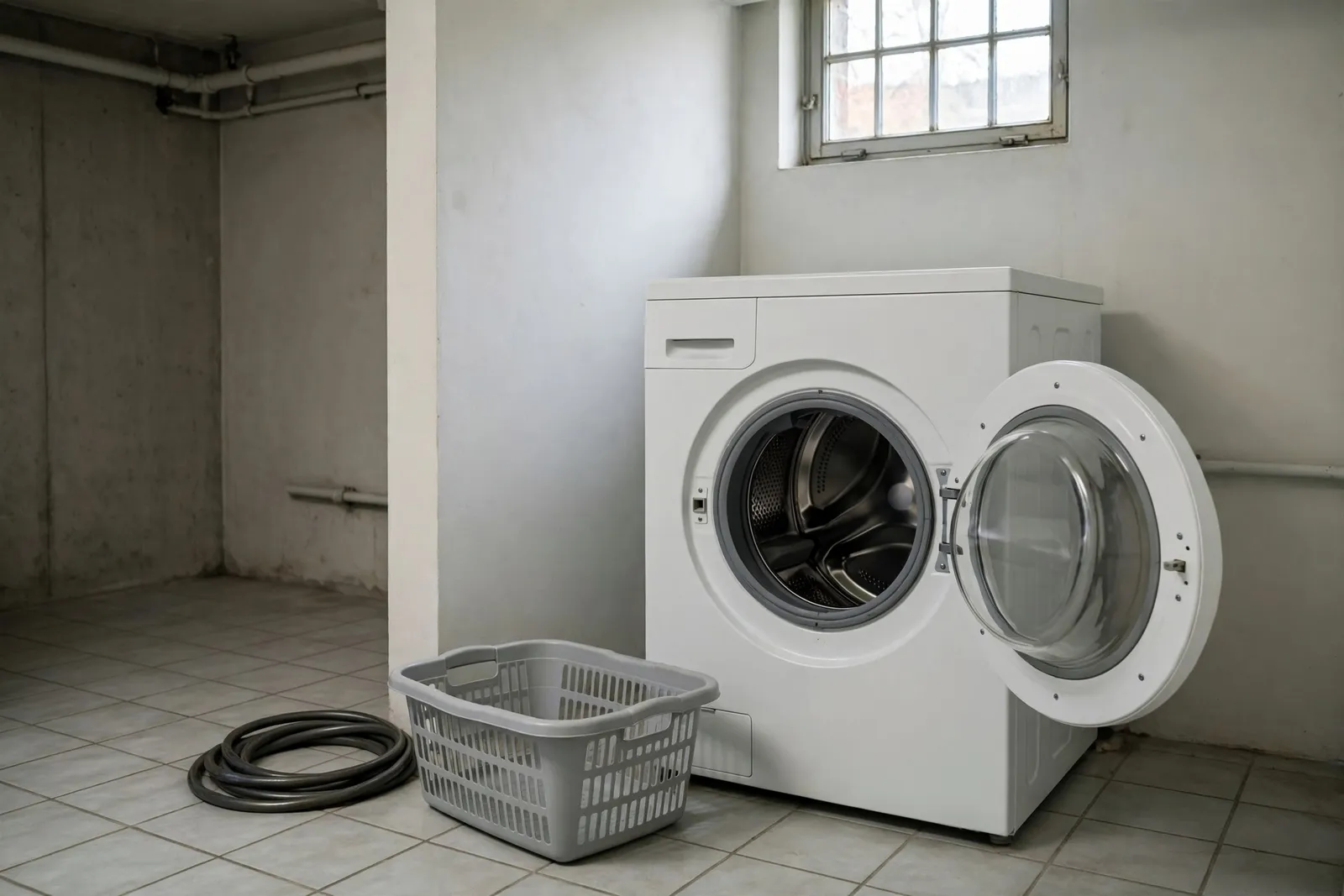
A precise listing avoids unnecessary visits. Photograph in daylight, with the machine empty and the floor and wall clear around it.
- The complete front, door closed.
- The open drum, head on, well lit.
- The door seal in close-up.
- The rating plate with the model and reference.
- The hoses and the back of the appliance.
- The open filter and the clean detergent drawer.
In the text, state the brand, model, year, capacity in kg, spin speed, energy class, dimensions and weight. Add the floor, whether there is a lift, and what the sale includes. Publish the listing on okazio with a title that names the brand, type and capacity.
One sentence on the reason for selling is enough: moving house, replacing it with a larger appliance, or end of tenancy.
Disclose the limits and set the price
Between private individuals, you sell the machine as it is, but you must disclose the faults you know about. A noise during the spin, a repaired leak, a worn seal: state it in writing in the listing, and keep a copy of the exchange.
For the price, open several comparable listings in your region, same type and similar capacity, and see what sells. Take into account the age, energy class, wear parts and whether a demonstration is possible. Allow a small margin for negotiation and a floor price below which you would rather keep the machine.
If the sale does not take off, shops that sell this type of appliance are obliged to take it back free of charge. Also ask at your local waste collection centre.
Demonstration, payment and handover
Prepare the machine for the visit: drain any remaining water, clean the drum, put the filter back in place. Run a programme in front of the buyer if asked, and let them open the door and touch the seal.
- Agree on a daytime appointment at your home, and do not stay alone if possible.
- Show the machine running before any payment.
- Take payment on handover, in cash or by TWINT, once the machine has been seen and tested.
- Refuse deposits sent from a distance, in either direction.
- TWINT will never ask you for a code received by SMS to receive money.
For transport, hand over the transport bolts if you kept them, empty the hoses and secure the drum as stated in the manual. Write a simple receipt with the date, the price and the note sold as seen. The machine goes, the space is free.
Sources
Prepared with AI tools, checked and proofread by the okazio editorial team.
An unfamiliar word in a listing?
Find its definition, an example and what to check in our glossary.
Explore the glossary