Shipping a parcel in Switzerland: what to know
Okazio editorial team
In brief
Many sales fall through at the shipping stage — not because it is complicated, but because nobody raised it beforehand. Settle the question in the listing.
Decide before you publish
Three questions, to settle once and for all:
- Are you willing to ship? If not, say so: it saves ten messages.
- Who pays for postage? The custom between private individuals is that the buyer pays. Put it in writing.
- Tracked or not? For a valuable item, the answer is yes, always.
Tracking, and why it matters
A tracked parcel gives you a number that proves it was handed in, carried and delivered. That is what protects both parties: the seller against a buyer who claims to have received nothing, the buyer against a seller who claims to have sent it.
For an expensive item, add signature on delivery.
Always check a tracking number on the carrier's website, never from a link received by message: a fake tracking page is one of the most common manoeuvres.
Rates and formats
Swiss Post's rates, formats and delivery times change, and they depend on the weight, the dimensions and the speed you choose. Check them on the Swiss Post website when you sell, rather than relying on an amount you remember from a previous shipment — and tell the buyer the price you actually saw.
What doesn't change:
- the price depends mainly on volume, not just on weight;
- an oversized parcel costs noticeably more: measure before quoting an amount;
- tracked shipping costs more than standard shipping, and is worth it.
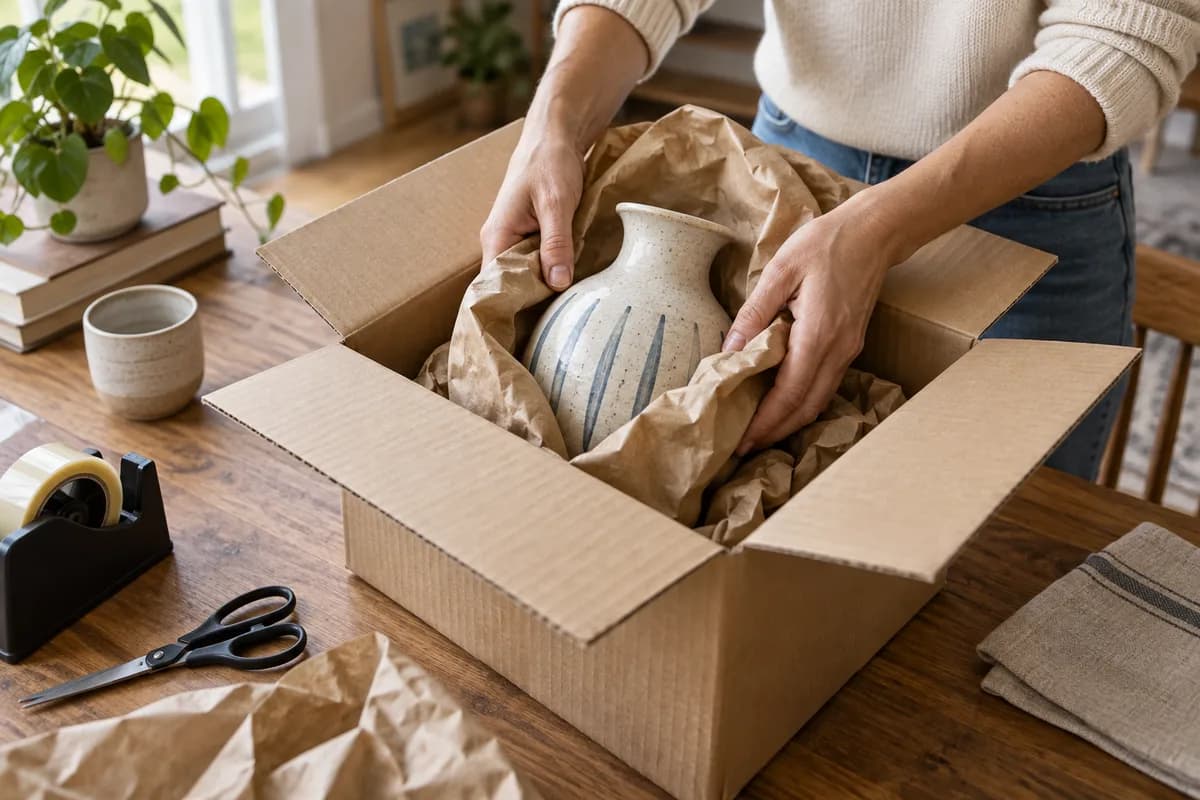
Packing properly
- Double-wall cardboard for a heavy or fragile item.
- An item that doesn't move in its box. What moves, breaks.
- Five centimetres of padding on every side for a fragile item.
- The label firmly stuck on, with the old one removed if you are reusing a box.
Photograph the packed item before sealing the parcel, and the sealed parcel with its label. Those two photos settle most disputes.
What can't be shipped
- Lithium batteries on their own, which are subject to strict rules.
- Flammable products, liquids included, and aerosols.
- Anything that exceeds the accepted formats — a piece of furniture, an assembled bike.
If you are unsure about a particular item, ask at the counter before the sale, not after.
When to pay
That is the tricky part, because the “item first” rule cannot apply. What limits the risk:
- for the buyer, not paying in advance for an expensive item to a seller with no history;
- for the seller, not shipping until payment has been received and confirmed in their own account — not on a screenshot;
- for both, preferring a handover in person above a certain amount. A trip costs less than a dispute.
Sources and method
Additional sources consulted on September 16, 2026.