Paying safely between private individuals in Switzerland
Okazio editorial team
In brief
There is no magic payment method. There are reversible methods and irreversible ones, and the whole safety of a sale between private individuals comes down to paying at the right moment, not with the right method.
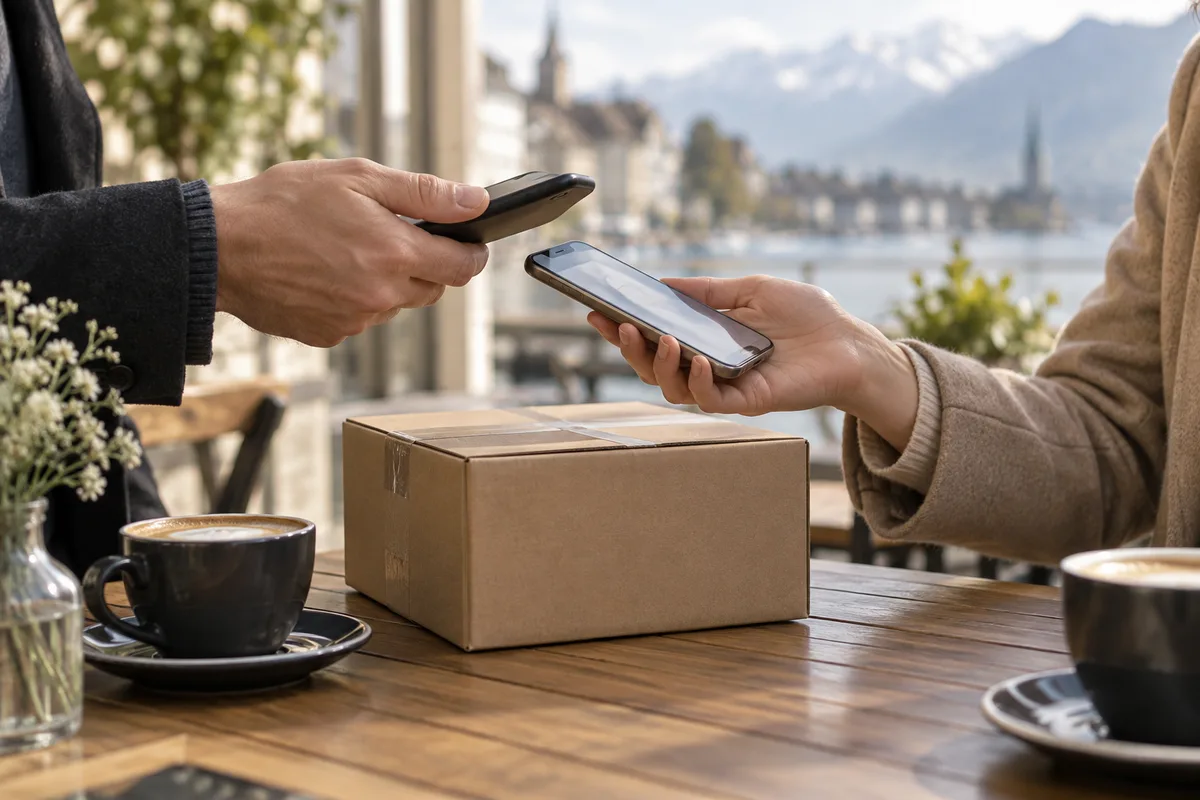
The rule: item in hand, then payment. Everything else is a variation.
Cash, at the handover
It is the safest method between private individuals, on one condition: you pay after seeing, trying and checking the item, not before.
For a large sum, withdraw it at the counter rather than from a cash machine, and count it in front of the other person. For a high amount, meeting in a bank's lobby settles both the withdrawal and the question of where to meet.
TWINT, also at the handover
Convenient, instant, and irreversible. That is what makes it a good way to pay face to face, and a very bad way to pay in advance.
Three things to know:
- TWINT never asks for a code by SMS. A “confirmation code” to pass on is a manoeuvre, without exception.
- A money request you receive is not proof of payment. Check your own app, not the screenshot you are shown.
- A payment that has been sent cannot be recalled. It can be asked back, and the other person agrees or not.
Bank transfer
Slow, traceable, and practically irreversible once executed. It suits a sale between people who have met, for a bulky item paid for after trying it.
Never send a transfer to a stranger for an item you haven't seen.
What you should never accept
- Gift cards. Irreversible, untraceable. No legitimate sale is settled that way.
- A payment link received by message. The page is a copy, however it looks.
- A payment above the price, followed by a request to refund the difference.
- A deposit before any meeting, whatever the pretext.
- Your banking login details, to anyone at all.
When the item has to be shipped
When the item has to travel, the “item first” rule cannot apply, and that is where the risk is real — for both parties.
What limits the damage:
- a tracked, signed-for delivery, whose number you check on the carrier's website, never from a link you received;
- photos of the packed item before the parcel is sealed;
- for the buyer, not paying in advance for an expensive item to a seller with no history.
For a valuable item, a trip costs less than a dispute.
And if it goes wrong
Gather everything: the conversation, the listing, the proof of payment, whatever you know of the other person's identity. Report the listing and the account — that is what stops the same person from doing it again. For a significant amount, you file a complaint with the cantonal police.
okazio does not hold the funds and cannot recall them. What the site can do is remove the account and keep the records.
Sources and method
Additional sources consulted on September 16, 2026.