Photographing your listing so it sells
Okazio editorial team
In brief
The photo decides everything: it is what gets the listing opened, and a listing nobody opens doesn't sell. It is also the only area where an hour of work pays back in hundreds of francs.
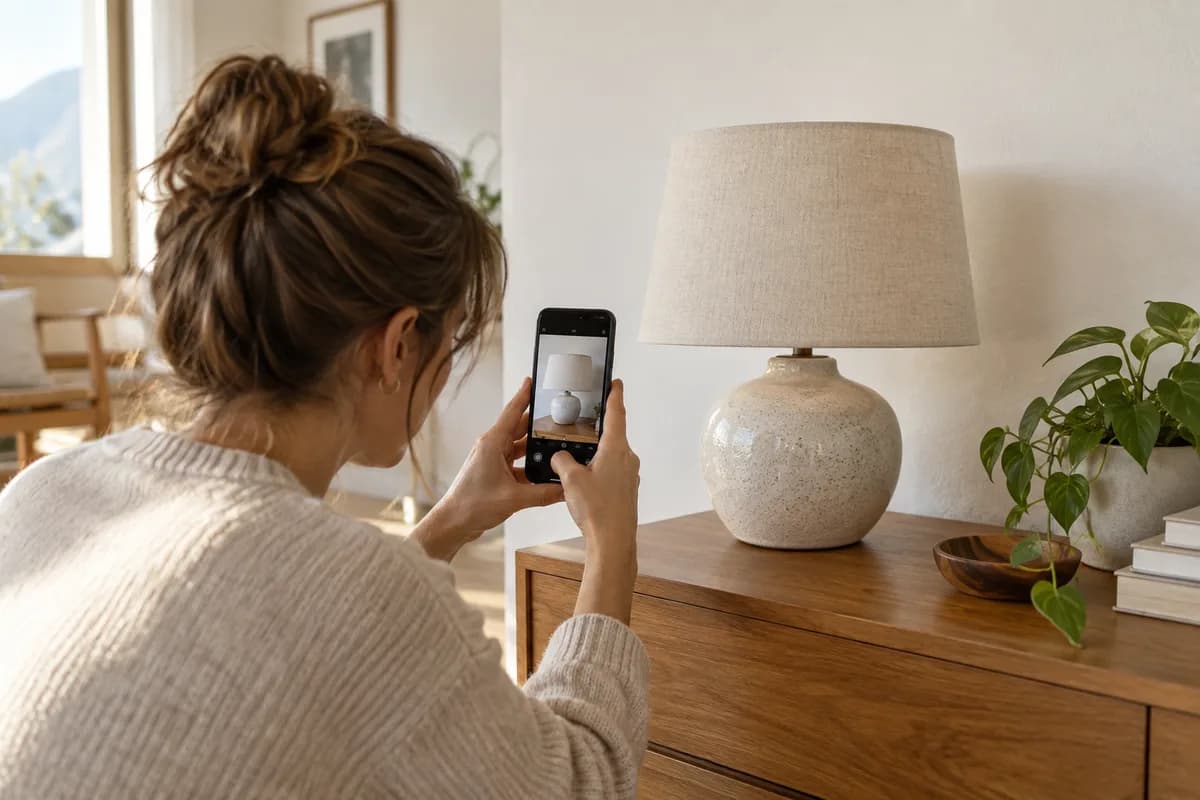
The five rules that are enough
Daylight, never the flash
Take photos near a window, or outside on an overcast day. The flash flattens shapes, distorts colours and creates reflections. A grey sky is the best light there is: soft, with no harsh shadows.
A neutral background
A light-coloured wall, a wooden floor, a cleared table. Whatever is lying around the item becomes the item in the buyer's mind. Clutter costs more than dust.
Clean it first
Ten minutes with a cloth changes what the buyer thinks they see. A clean item isn't just nicer to look at: it shows it has been looked after.
Frame tightly, and vary the angles
- One overall shot, at a three-quarter angle.
- One from the front.
- One or two details: the brand, the label, the serial number.
- One for each visible flaw.
Show the flaws
It is counter-intuitive, and it is what sells. A scratch photographed in the listing doesn't get a sale cancelled; a scratch discovered on the spot does — and you will have made the trip for nothing.
What to avoid
- Photos taken at night, under yellow light.
- Photos of the item in a heap on a bed or in a box.
- Screenshots from the manufacturer's website. The buyer wants to see your own item, not a studio render — and it is also the first sign of a fake listing.
- Filters. A retouched colour is a disappointment at the handover.
The order of the photos
The first is the only one many people will see. Put the whole item in it, sharp, well lit, on a neutral background. Keep the details for the ones that follow.
The format
Shoot in landscape if the item is wide, in portrait if it is tall. A centred item that fills the frame without touching its edges reads well as a thumbnail — and a thumbnail is how the listing is seen first.
Tricky items
- Anything shiny — jewellery, glass, screens: photograph it in the shade, or behind a net curtain. Direct light gives you nothing but reflections.
- Anything black: put it on a light background, never on black.
- Anything bulky: clear the space around it and step back. A photo taken too close to a piece of furniture distorts it.
- Clothes: on a hanger or worn, never folded.
One last thing
Take the photos when you decide to sell, not when you publish. It is the same hour of work, but done without rushing — and it shows.