A complete set or loose bricks: two different markets
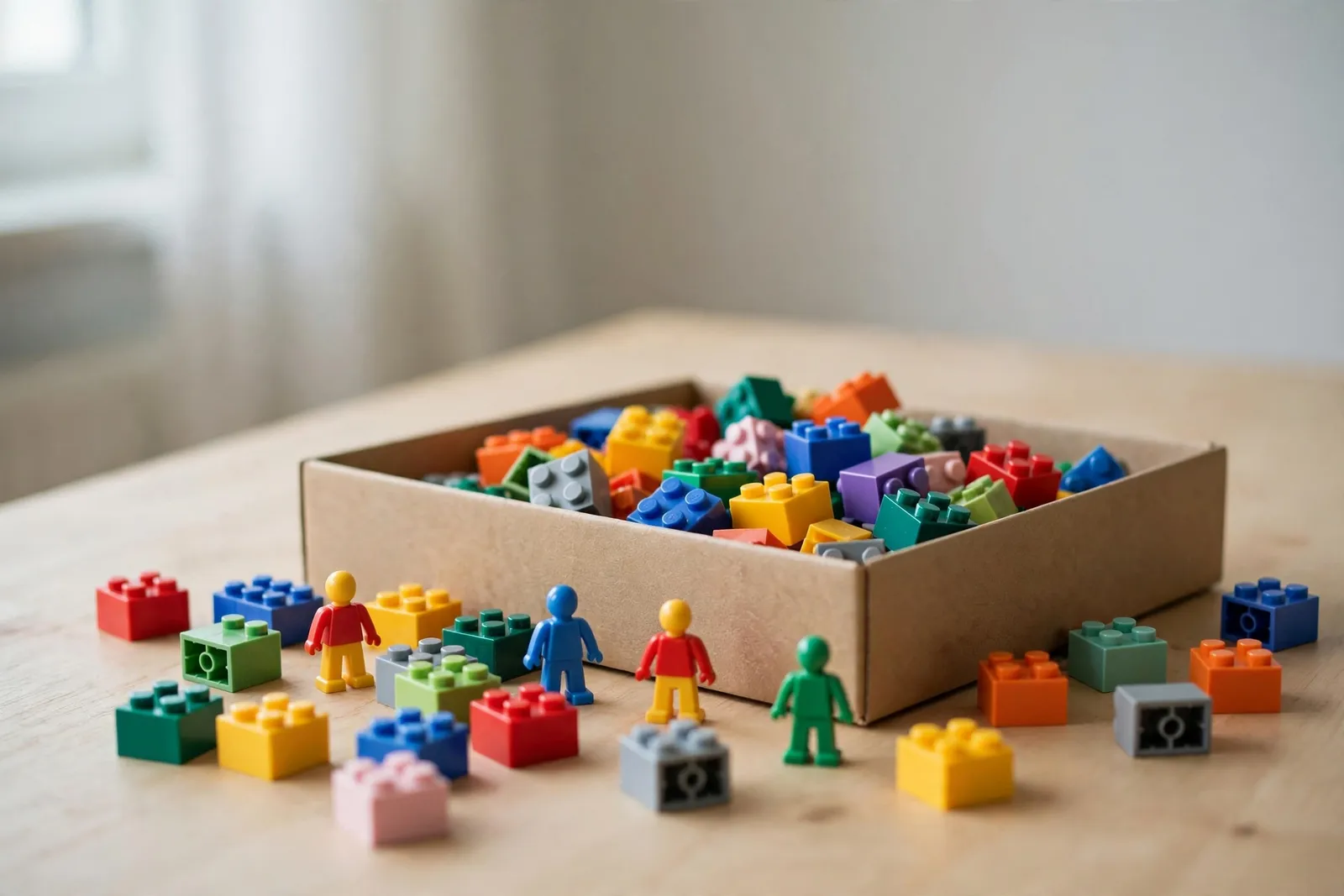
Two markets coexist under the same word. On one side, the identified set, with its reference, its box and its instructions. On the other, loose bricks, sold by volume or by weight, without an inventory. The price and the patience required are not the same.
A complete set can be checked: the instructions give the list of parts and the building order, which makes it possible to check for missing pieces. Loose bricks are judged by eye, by the variety of pieces and by the proportion of useless pieces.
- The instructions, on paper or as a downloadable file: this is your reference for checking.
- The minifigs and their accessories, often removed from lots before sale.
- The special pieces: molded, transparent, flexible, technical.
- The large base plates, heavy and easy to forget.
- The shade of the pieces: grays and browns changed tone about twenty years ago, and a mixed lot is immediately visible.
An incomplete lot is not without value: it serves as a reserve of pieces. But it does not sell for the price of a presentable set.
Read the listing and ask the right questions
A serious listing answers a few simple questions. Ask them before setting an appointment, and you will save yourself a trip.
- Does the lot correspond to a specific set, with its reference, or is it a mixture?
- Are the instructions and the box included?
- What is the approximate weight of the lot, or its volume?
- Are there any broken, chewed, yellowed or discolored pieces?
- Does the lot come from a smoking household or one with animals?
- Does the displayed price apply to the whole lot?
Ask for a photo of the contents spread out, not only of the closed box. A photo taken with flash hides scratches; a photo taken from far away hides missing pieces. A seller who answers precisely already says a lot about the real condition of the lot.
In person: check the pieces one by one
In person, take the time to take out the pieces. A check of a few minutes avoids unpleasant surprises once you get home.
- The printed patterns: faces, screens, panels. Look for scratches and worn edges, especially on pieces that clip together.
- The transparent pieces: they scratch quickly and lose their shine.
- The clips, hinges and bars: open and close them once. A microcrack can be seen in raking light.
- The minifigs: cracked hands, arms and torsos, legs that no longer hold.
- The technical pieces: axles, gears, connectors. A twisted piece no longer fits together correctly.
- The colors: a lot that yellows has often been left in the sun.
If the seller has the instructions, open them at the list of rare pieces. These few references are often enough to know whether the set is complete or has been picked over. Without instructions, judge the consistency: a vehicle set without wheels indicates an incomplete lot.
Compatibility: bricks from different brands
Plastic bricks from different brands often fit together, because the patents on the studded brick entered the public domain long ago. Compatibility is therefore not the main problem. The quality of the fit, however, varies: some bricks are too tight, others hold poorly and come loose as soon as you move the construction.
Watch out for scales. Large bricks for very young children do not fit with standard bricks, even if they look similar. Also check the pieces that are not bricks: rails, figures, accessories and electronic elements each have their own system.
- Fit two bricks from different brands together before buying: the assembly must be firm, without forcing.
- Look at the studs: soft plastic marks and turns white at the edge.
- A lot that is mostly original resells better than an undifferentiated mixture.
For a child, a mixed lot works very well. To complete a specific set, however, pieces that are not original are noticeable and disappointing.
Clean the bricks without damaging the patterns
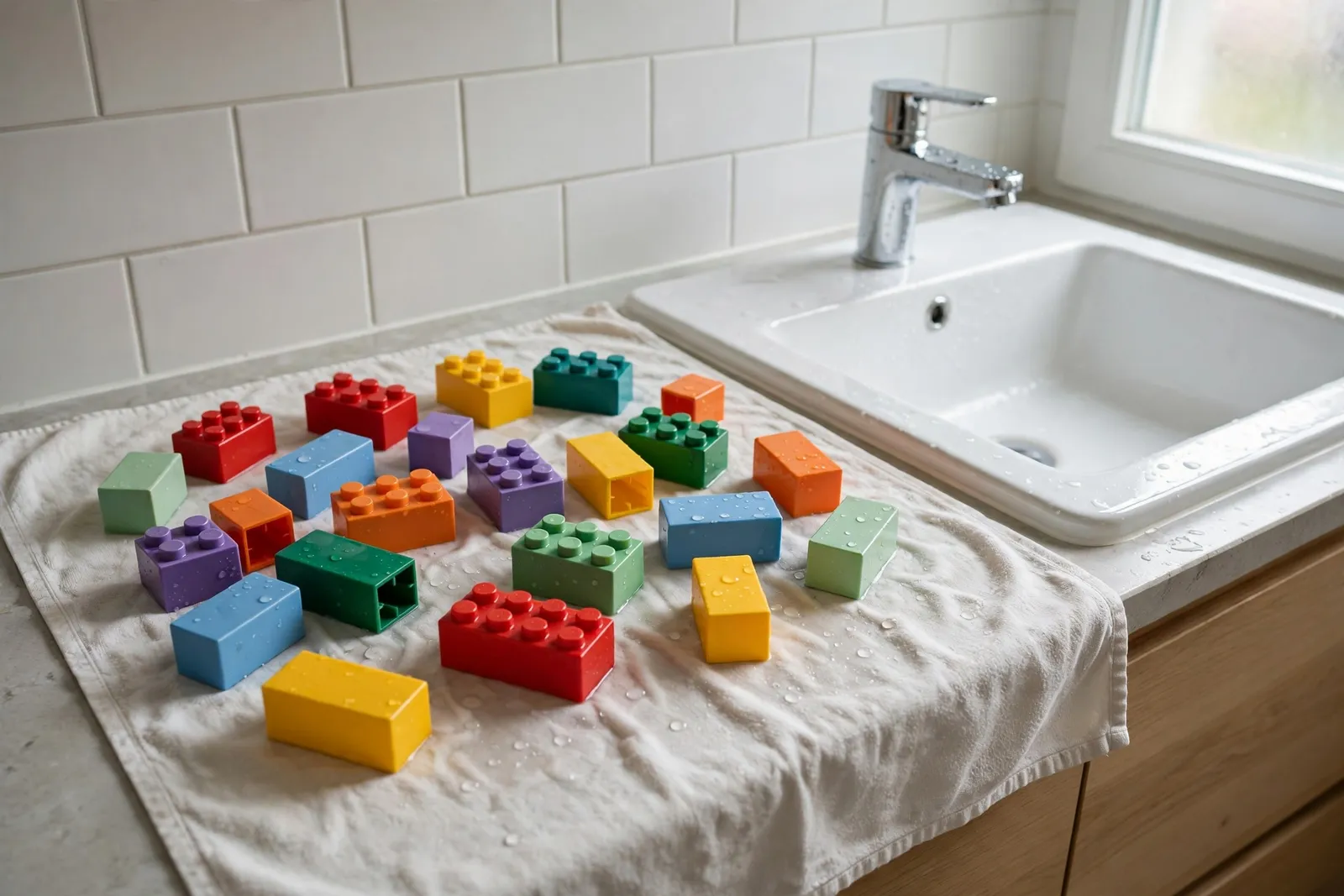
The plastic of the bricks tolerates lukewarm water, not heat. The dishwasher and the washing machine deform the pieces and loosen the prints. A hand bath remains the safest method.
- Sort. Remove the batteries, the electronic pieces, the stickers already applied and everything that is not hard plastic.
- Prepare a bath of lukewarm water with a little mild soap, in a basin.
- Scrub the dirty pieces with a soft toothbrush, without pressing on the printed patterns.
- Rinse with clear water, then drain in a colander.
- Spread out on a terry towel and let dry in the air, in the shade, without a hairdryer.
Printed pieces require separate treatment: no prolonged soaking, no alcohol or solvent, no hard rubbing. A pattern that comes off does not come back. Transparent pieces only need a quick rinse, because very hot water dulls them.
Estimate a fair price, in CHF
There is no official price scale. The reference is the price of the new set when it is still sold, and the difficulty of finding the missing pieces. A complete set with box and instructions is often a fraction of the new price; an incomplete set is closer to the price of loose bricks.
Loose bricks are easier to compare by weight. The price per kilo varies greatly depending on sorting, cleanliness and the presence of minifigs, with no fixed scale. A sorted, clean and uniform lot sells for more than a dusty bag.
Negotiate on facts, not on an impression: missing pieces listed, damaged patterns, missing instructions, removed minifigs. Each finding justifies a lower price, provided you remain courteous and do not waste the seller's time.
Meeting, payment and sorting at home
Arrange to meet in a public, busy place during the day. Take out the pieces and check them in daylight, on site. Pay only on handover, in cash or by TWINT, once the lot has been checked. A remote deposit, even a small one, has no reason to exist.
TWINT never asks for a code received by SMS to receive money. If the person you are dealing with asks you for a code, an on-screen validation or an advance to release the payment, stop the discussion.
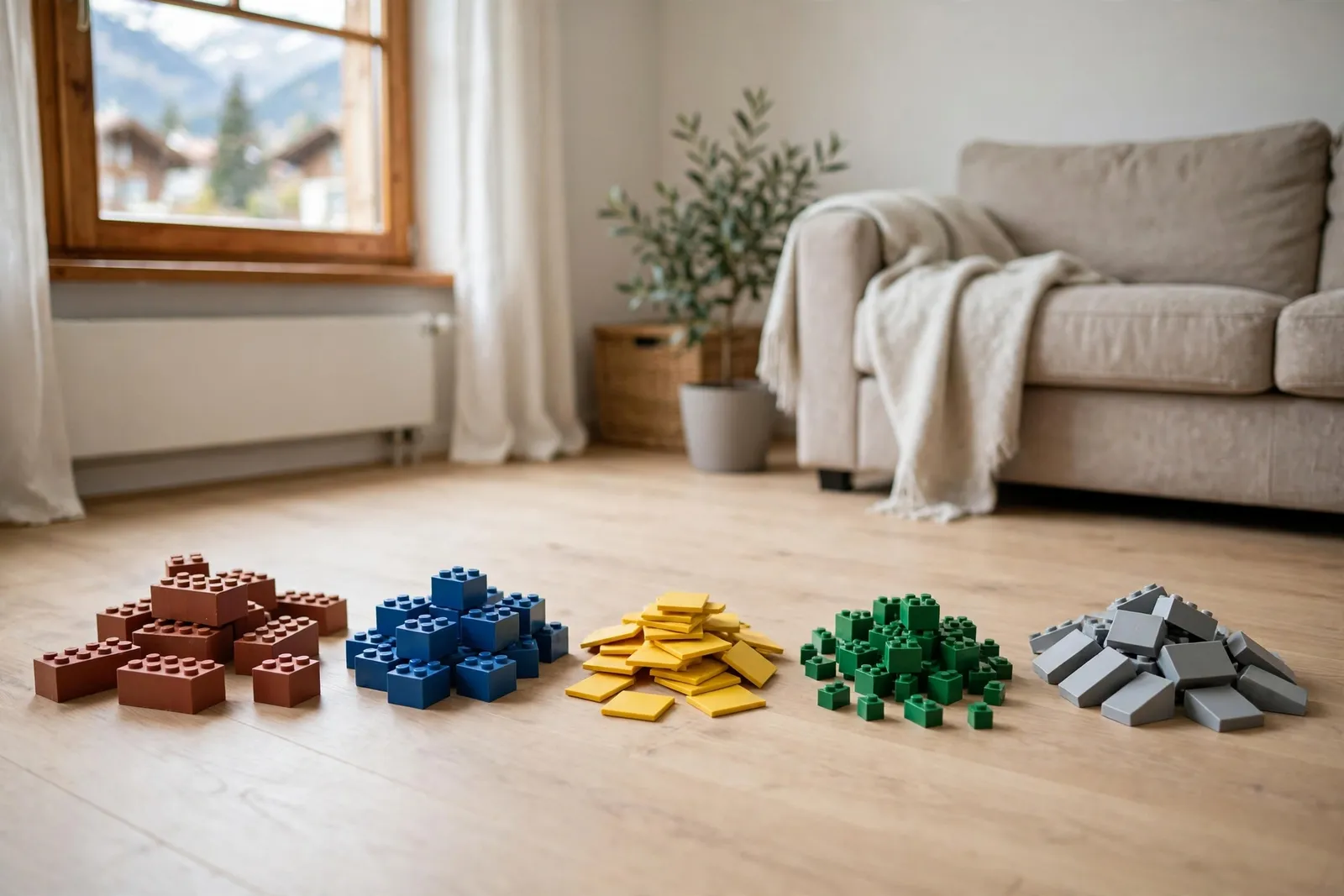
Back home, wash the lot before letting a child have it, then sort by type: bricks, plates, technical pieces, minifigs. This simple sorting avoids buying twice what you already own. If you resell part of the lot, publish a listing on okazio with the weight and a photo of the actual contents.
Sources
Prepared with AI tools, checked and proofread by the okazio editorial team.
An unfamiliar word in a listing?
Find its definition, an example and what to check in our glossary.
Explore the glossary