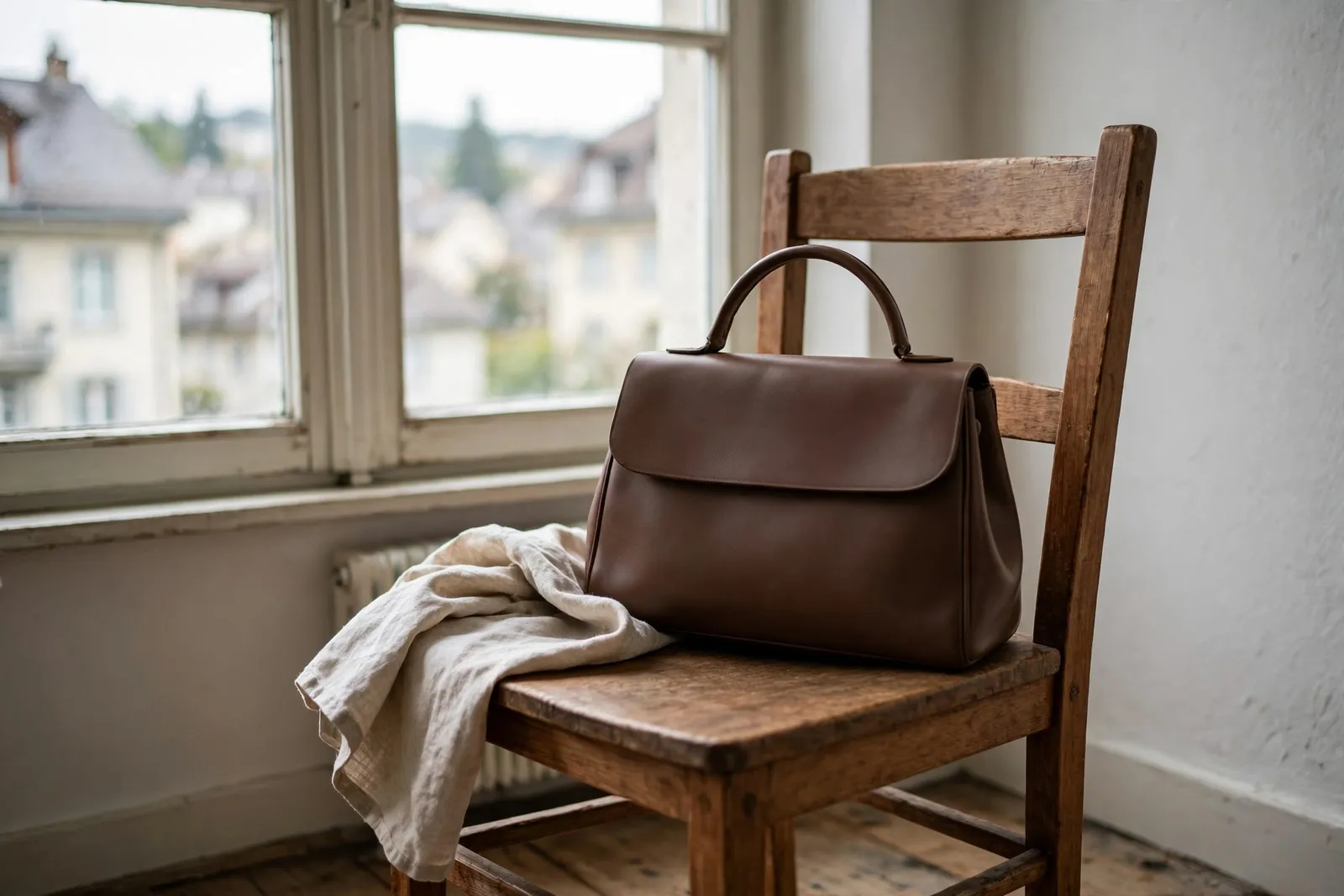
Prepare the bag and your paperwork
Before you publish a listing, empty the bag and remove dust with a soft cloth suitable for the material. Then take out everything that can help the buyer get a precise idea: invoice, packaging, accessories and maintenance history.
- Gather the purchase invoice, the receipt or the proof of payment if you have them.
- Find the original packaging, the dust bag, the authenticity card and the accessories supplied.
- Note any major repairs, replacements or cleanings.
- Prepare a bright, neutral place for the photos.
- Check that the bag contains nothing personal.
Photos that show everything
Photograph in daylight, against a simple background, without filters. Show the bag empty and slightly filled so that it keeps its shape. A clear photo is better than a flattering setup.
- The bag from the front, the back and the side, standing upright.
- The bottom and the four corners, which are common areas of wear.
- The handles, the shoulder strap and the attachments.
- The fastening, the hardware and the seams.
- The inside, the lining and any stains.
- The accessories: dust bag, card, box.
Add a close-up photo for each defect. A flaw shown honestly is more reassuring than a flattering photo that hides the worn corner.
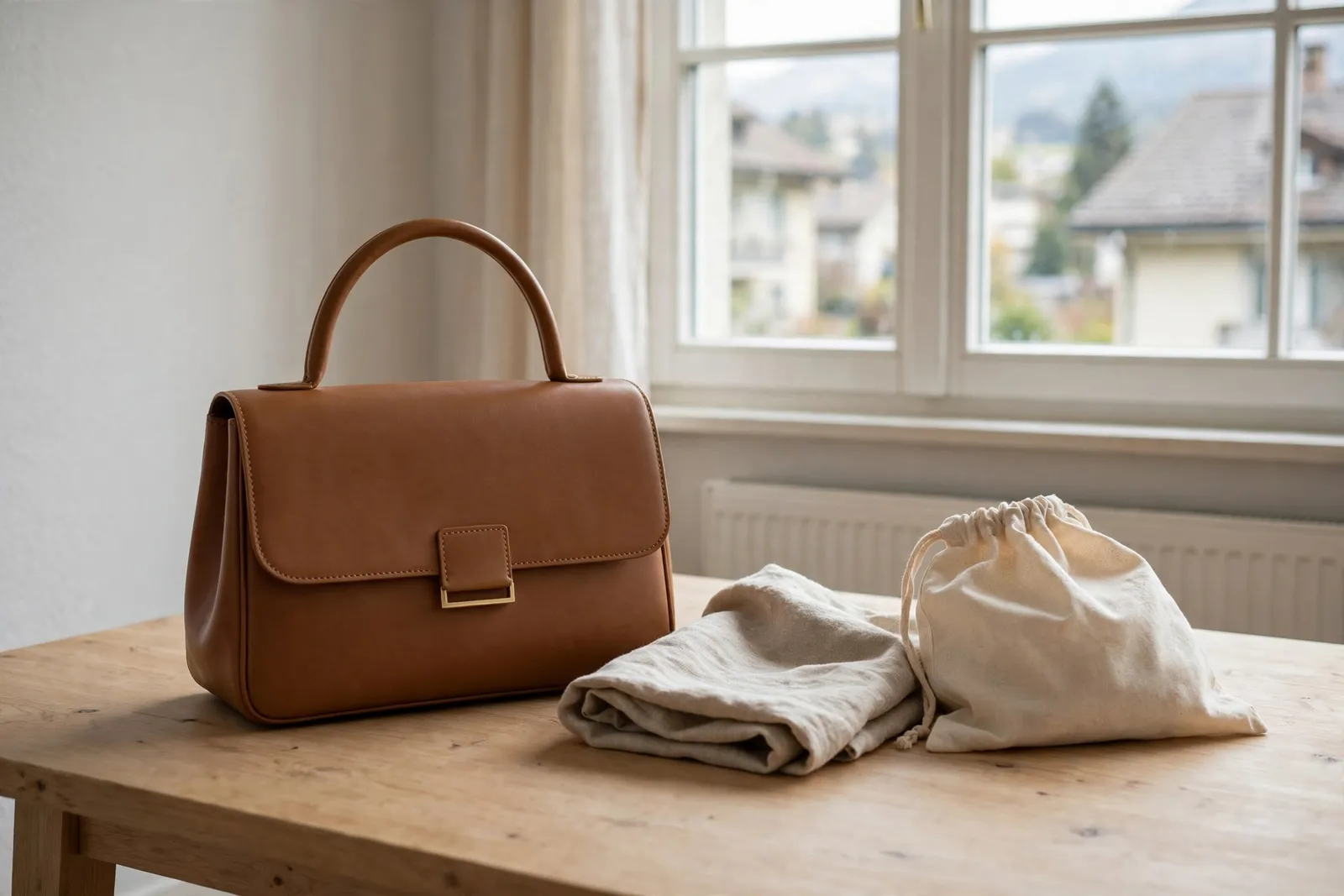
Describe wear honestly
Do not just say good condition. State where the wear is, how it looks and whether it changes how the bag can be used. The buyer must be able to understand the condition without getting a surprise when they come.
- Rubbed corners, faded color or softened leather.
- Scratches on the leather, the patent finish or the hardware.
- Stains on the lining, lingering odors, makeup marks.
- Open seams, a fastening that catches, a replaced button or zip.
- Darkened handles, worn edging, a stretched shoulder strap.
- Repairs carried out and non-original parts.
If a defect does not show in a photo, write it in the listing. One clear sentence avoids a long discussion at handover.
Gather proof of purchase
An invoice is not always available, especially for a bag bought a long time ago or received as a gift. Gather what you have, without promising more than is true.
- The invoice or a readable proof of purchase.
- The original packaging and the dust bag.
- The authenticity card if the manufacturer provides one.
- The accessories supplied with the bag.
- The maintenance or repair documents, if they exist.
Do not create a document and do not fill in an invoice by hand. If you do not have proof, say so clearly and let the photos and the examination of the bag speak for themselves.

Set a price and write the listing
Look at several comparable listings for the same model, the same size and a similar condition. Compare the asking prices, not just one isolated figure. A price that is too high scares buyers away; a very low price can seem suspicious.
In your listing, state the brand, the model if you know it, the material, the color, the approximate dimensions, the accessories and the condition. Stay factual.
- Start with a clear sentence: what you are selling and its general condition.
- Add the measurements and the included accessories.
- Describe the wear in a separate paragraph.
- State what is not included.
- End with the arrangements for meeting and payment.
State whether the price is firm or whether discussion is possible. If you prefer handover in person, write this from the start to avoid misunderstandings.
Reply and complete the sale
Answer questions and send additional photos if asked. Keep the exchanges in written messages: this leaves you a record if a detail was discussed.
- Agree on a public, busy place at a time when there are people around.
- Let the buyer examine the bag, open the fastenings and check the stated defects.
- Payment on handover, in cash or by TWINT, once the item has been seen.
- Refuse any deposit requested remotely and do not share a code received by SMS: TWINT never asks for a code to receive money.
- Hand over the bag and accessories, then confirm the sale in writing if you wish.
Sources
Prepared with AI tools, checked and proofread by the okazio editorial team.
An unfamiliar word in a listing?
Find its definition, an example and what to check in our glossary.
Explore the glossary